

MEDIA CENTER
Jan. 30th, 2026
Wide-Perforation Roller Shutters: How to Balance Day–lighting Performance and Structural Stability?
In modern architectural design, natural day-lighting, ventilation performance, and facade aesthetics are increasingly important considerations.
While traditional roller shutters offer reliable shading and security, they often limit daylight transmission and visual openness.
As a result, large-perforation roller shutter slats have gained growing attention from architects, system integrator, and project developers.
However, this innovation also raises a critical question:
As perforations become larger to improve day-lighting, can the shutter still maintain sufficient structural stability?
This article provides a systematic analysis from four key perspectives—structural design, perforation geometry, material selection, and real-world applications—to explain how large-perforation roller shutters can achieve an optimal balance between day–lighting performance and mechanical strength.
The Core Value of Large-Perforation Roller Shutters: More Than Just Bigger Holes
Large-perforation designs are often misunderstood as simply “larger holes.” In reality, a well-engineered large-perforation roller shutter addresses three critical performance goals:
Improved natural daylight penetration, reducing daytime artificial lighting
Balanced shading, visibility, and privacy
Reliable structural stability under wind load and long-term operation
If perforation size is increased without proper structural consideration, several risks may occur:
Slat deformation or sagging
Increased noise during operation in windy conditions
Reduced durability and long-term stability
True performance depends on engineering logic, not perforation size alone.
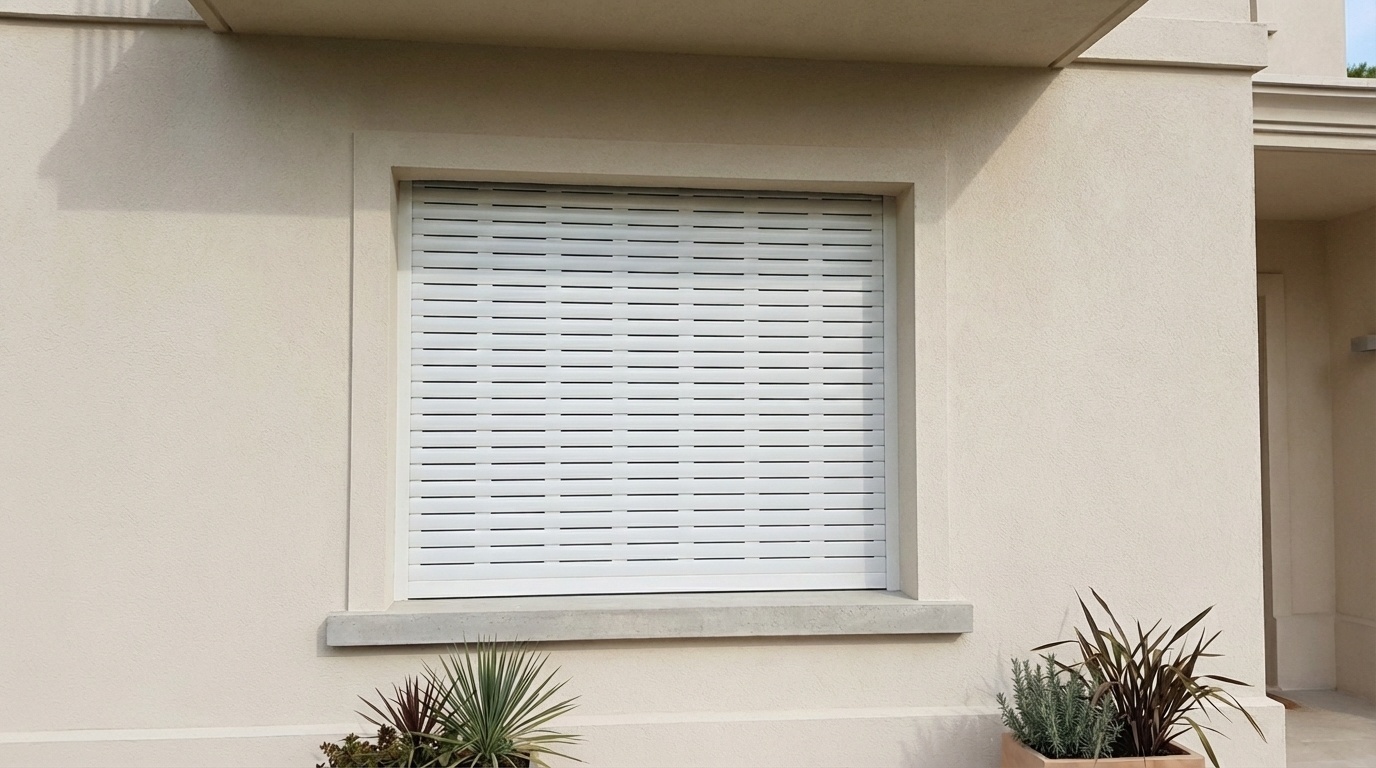
Day–lighting Performance: Perforation Shape, Spacing, and Open Area Ratio
Perforation Shape: Structural Logic Behind Visual Design
Perforation geometry plays a decisive role in both load distribution and visual comfort.
Optimized designs commonly include:
Horizontal elongated perforations
Aligned with the primary stress direction of the slat
More effective at dispersing wind pressure
Rounded perforation edges
Reduce stress concentration
Minimize the risk of material fatigue over time
High-quality large-perforation slats reflect a balanced integration of structural engineering and architectural aesthetics.
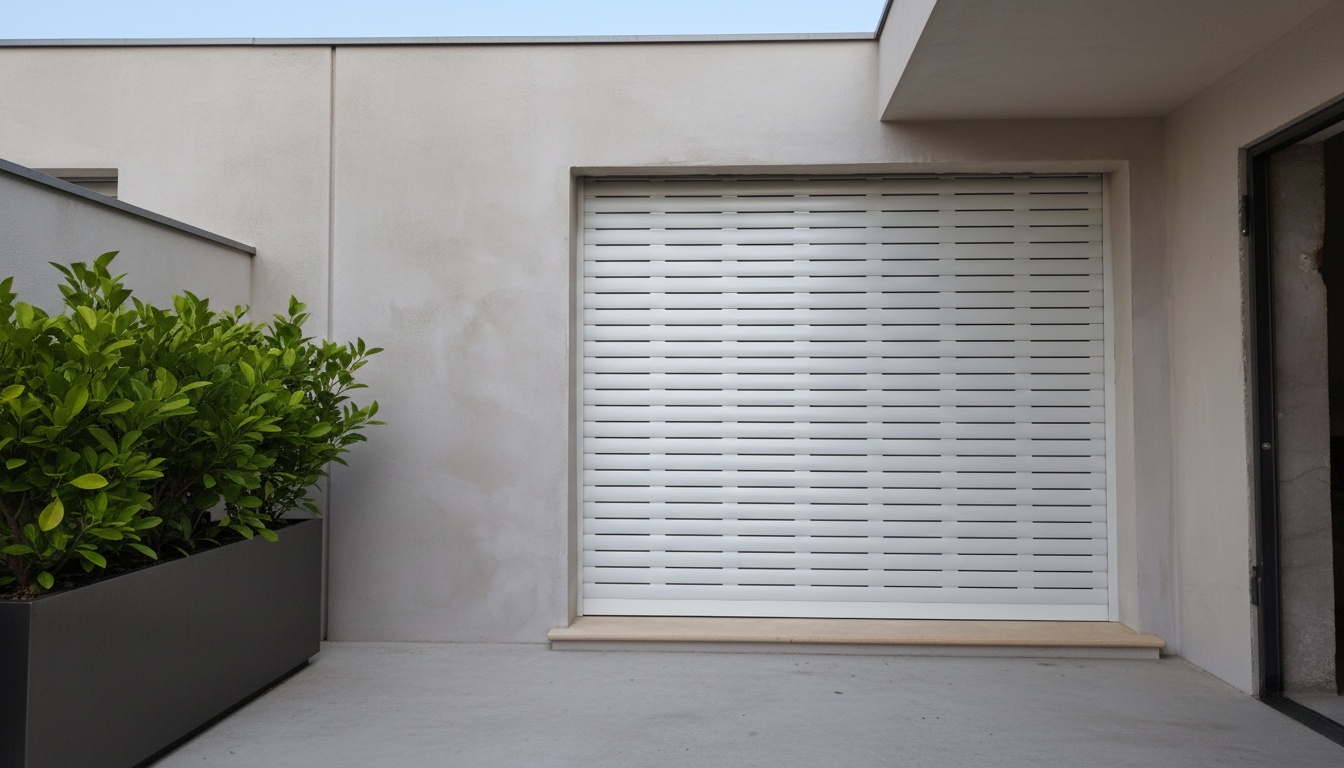
Perforation Spacing: The Critical Threshold Between Light and Strength
Excessively dense perforation spacing
Higher daylight transmission
Significantly reduced mechanical strength
Overly wide spacing
Improved rigidity
Compromised day-lighting and ventilation benefits
A mature solution involves finite element analysis (FEA) to strategically place perforations in non-critical stress zones, achieving functional perforation rather than uniform punching.
Open Area Ratio: A Controlled, Not Maximum, Value
In proven engineering applications, stable large-perforation roller shutters maintain the open area ratio within a safe and controlled range:
Ensuring sufficient daylight and airflow
Preserving structural integrity under operational and environmental loads
Higher open area does not automatically mean better performance—controlled optimization is key.
Structural Stability: Slat Profile Design and Material Selection
Slat Cross-Section Design Determines Bending Resistance
Even with large perforations, a well-designed slat profile can deliver excellent rigidity:
Reinforced curved or composite cross-sections
Increased structural height at load-bearing edges
Optimized interlocking zones for enhanced stiffness
This explains why large-perforation slats from different manufacturers can show significant performance differences.
Aluminum Alloy Selection: Not All Aluminum Is Suitable
Large-perforation roller shutters require aluminum that offers:
High mechanical strength
Controlled ductility
Consistent extrusion quality
Recommended practices include:
Use of architectural-grade aluminum alloys
Tight wall-thickness tolerances
Structural integrity inspections prior to surface treatment
Structural Enhancement Through No-Adhesive Foam Filling
For applications requiring enhanced stability, no-adhesive foam filling technology can provide additional benefits without compromising perforation areas:
Increased overall slat rigidity
Reduced operational noise
Improved resistance to wind pressure and vibration
Application Scenarios: How the Balance Is Achieved in Practice
Commercial and Office Buildings
Key requirements:
Day-lighting efficiency
Visual openness of the facade
Architectural consistency
Recommended approach:
Medium-to-high open area ratio
Reinforced slat cross-section design
Residential and High-End Apartment Projects
Key requirements:
Privacy and security
Nighttime shading performance
Recommended approach:
Functionally distributed large perforations
Integration with intelligent control systems
High-Wind or Coastal Environments
Key requirements:
Wind resistance
Long-term operational stability
Recommended approach:
Optimized perforation spacing
Reinforced edge geometry
Controlled overall open area ratio
Conclusion: True Balance Comes from System-Level Engineering
The true value of large-perforation roller shutters does not lie in how large the perforations are, but in:
Whether the design is supported by structural calculations
Whether it matches real application environments
Whether performance remains stable throughout long-term use
When day–lighting performance, structural design, material quality, manufacturing process, and application scenarios are fully integrated, large-perforation roller shutters can truly deliver:
Maximum daylight without compromising strength.
Contact us

Grace
Account Manager

info@ulepanda.com

+86 15836962895

+86 15836962895