

MEDIA CENTER
Mar 02th, 2026
Why Does ULE PANDA Insist on Introducing Italian-Imported Roller Shutter Slat Tooling?
For roller shutter wholesalers, project contractors, and system integrator, the key concerns when selecting slats are:
consistency and stability
factory supply capacity and reliable lead times
matching capability for repeat and supplementary orders across different batches
These frequently discussed issues are, in essence, determined by manufacturing precision.
And manufacturing precision, first and foremost, depends on tooling accuracy.
The core purpose of ULE PANDA in introducing Italian tooling is to establish this long-term, stable manufacturing capability at the source.
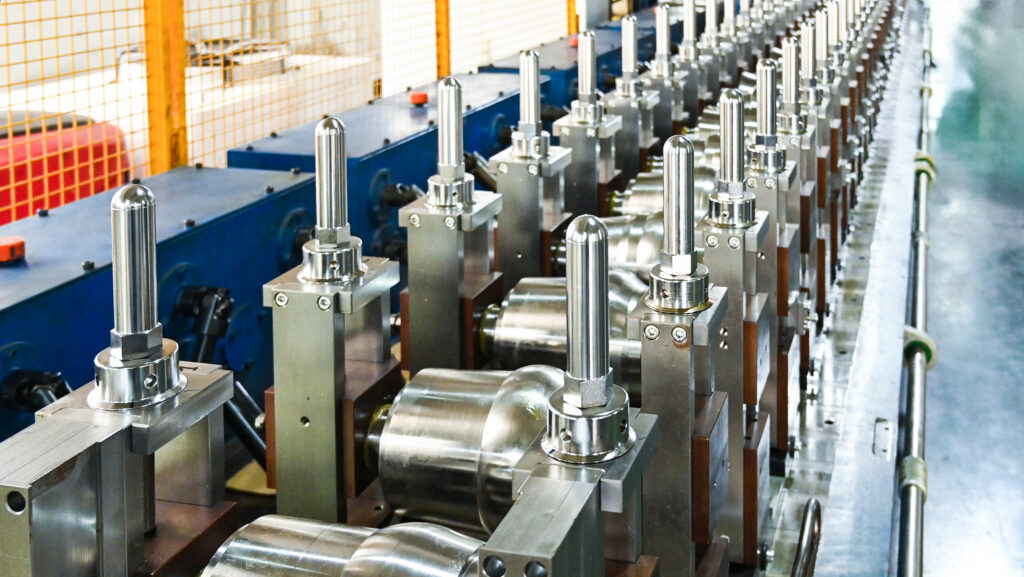
Why Does Equipment Determine the Quality of Slats?
In the roller shutter slat manufacturing industry, rolling speed, dimensional tolerance, straightness, and surface quality are all directly determined by the tooling structure and equipment capability.
The commonly used conventional tooling in the industry lacks sufficient precision, which can lead to a series of problems:
unstable interlocking between slats
uneven slat surface after rolling
thickness variations between different production batches
The significance of ULE PANDA introducing imported tooling lies in building a long-term and stable manufacturing system from the very beginning.
Three Major Manufacturing Improvements Brought by High-Precision Tooling
1. Higher Dimensional Accuracy and Consistency
According to the EN 12020 precision aluminium profile standard, the tolerance of critical dimensions can be controlled within the ±0.10 mm level, while conventional roll-formed profiles are typically within the ±0.15 – ±0.30 mm range.
The direct results of higher precision are:
smoother slat interlocking
more stable rolling diameter
better straightness
This is not merely a parameter change, but a transformation in the overall system operating condition.
Item | Conventional Industry Roll-Forming Precision | High-Precision Manufacturing System |
Dimensional tolerance | ±0.15 – ±0.30 mm | ±0.10 mm level |
Applicable standard | EN 755 (general industrial profiles) | EN 12020 (precision profiles) |
Nominal thickness | Certain fluctuations | Uniform and consistent |
Hook / interlocking accuracy | Slight differences between batches | Long-term consistency |
Slat interlocking condition | Slight variation in tightness | Smooth and stable engagement |
Rolling operation | Slight swaying in large curtain surfaces | More stable rolling |
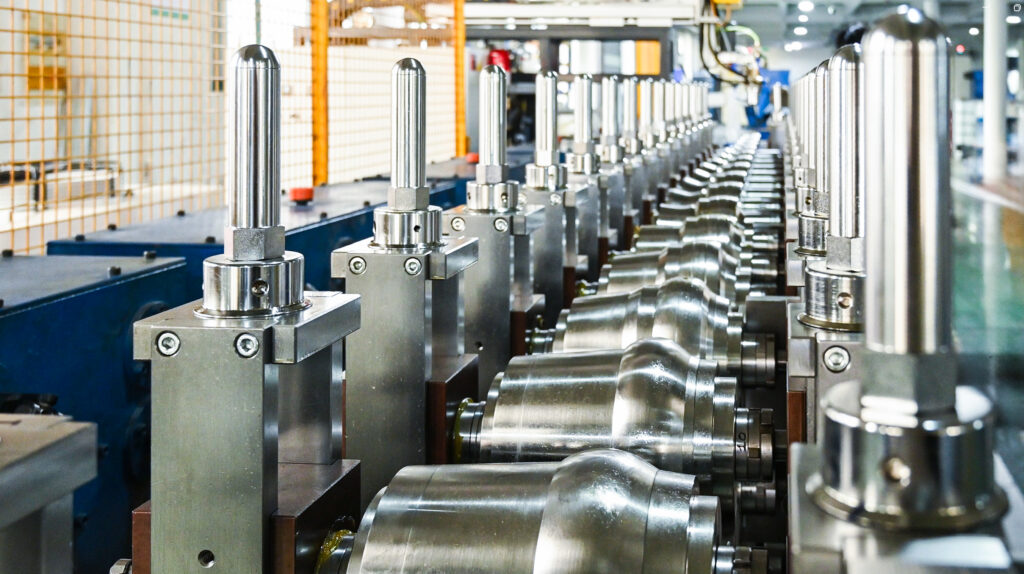
2. Higher and More Stable Production Speed
In the conventional industry setup, many slat linking processes rely on manual operations. Production rhythm is easily affected by operator skill levels and workforce allocation, leading to fluctuations in efficiency and stability.
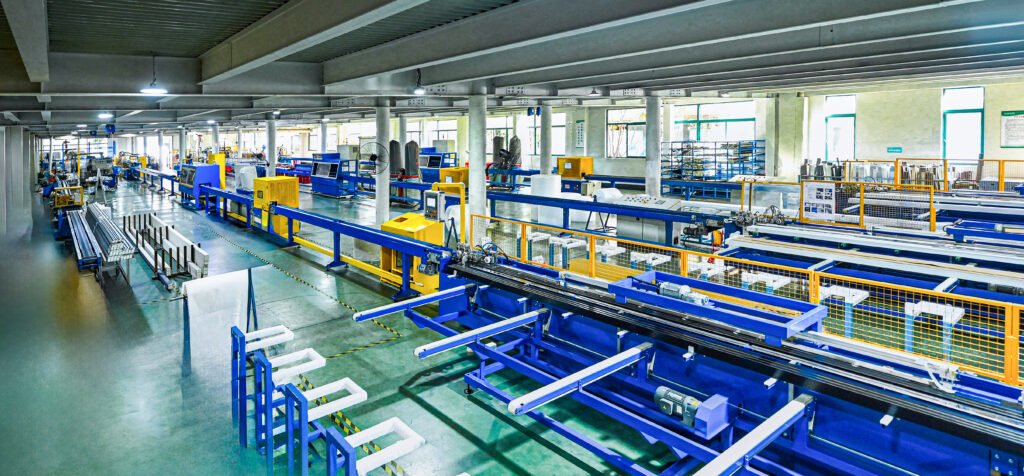
The imported production line introduced by ULE PANDA enables:
automated mechanical slat linking
a continuously consistent line rhythm
significantly reduced manual intervention and waiting time
guaranteed assembly precision
Based on this automation, ULE PANDA slat production line can operate stably in a higher efficiency range over the long term, reaching up to 1 meter per second.
This does not simply mean higher output — it means:
more reliable lead times for large-volume orders
no quality compromise when increasing speed
stronger continuity in project supply
3. Longer Tooling Life and Fewer Maintenance Intervals
The Italian-imported tooling introduced by ULE PANDA adopts:
higher-grade tool steel
stable heat treatment processes
optimized flow channel design
Even under long-term high-temperature and high-pressure extrusion conditions, it maintains:
minimal bearing surface wear
balanced material flow rate
Under normal production conditions, conventional tooling in the industry usually requires dimensional correction after relatively short continuous production lengths.
A high-stability tooling system can extend the maintenance interval by approximately 30%–50%, allowing profiles to maintain dimensional consistency over longer production cycles.
This difference not only:
reduces downtime for adjustment
but also significantly improves batch-to-batch matching.
Conclusion:
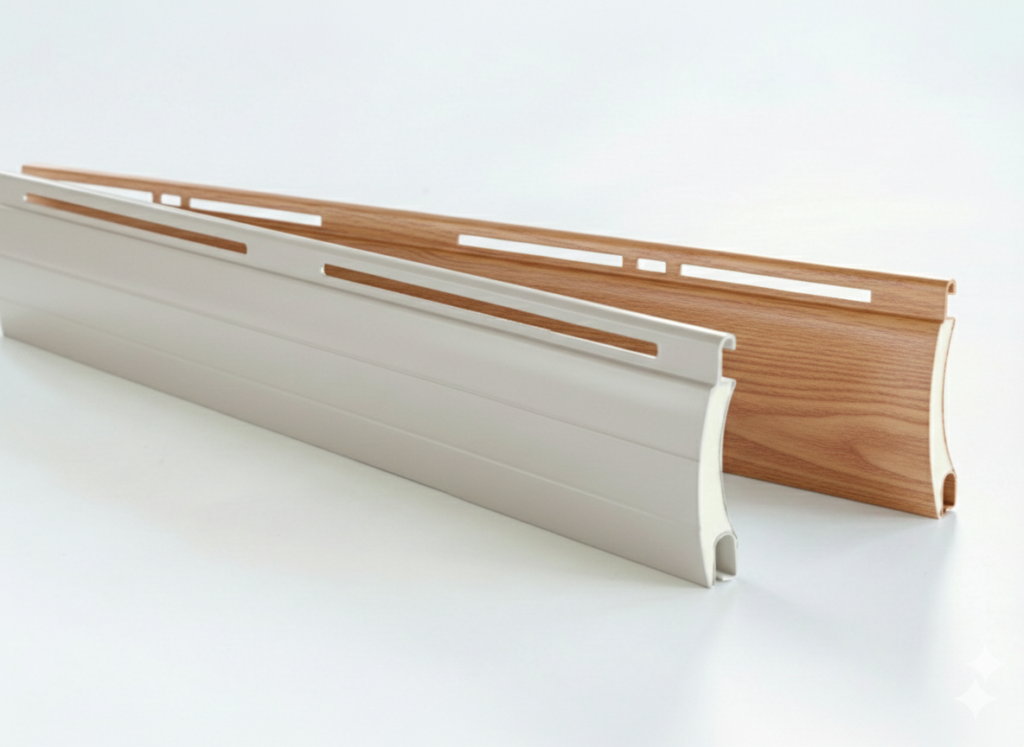
ULE PANDA introduction of Italian-imported tooling is not for a single product or short-term order, but for:
building a more reliable high-quality production system
achieving more stable long-term supply capability
establishing a manufacturing foundation aligned with the high-end European market
Solar shading should not merely block sunlight — it should create a quiet and comfortable living experience.
By introducing Italian tooling, we are transforming external roller shutters from a “sun-shading product” into a precision architectural component.
This is not just an equipment upgrade — it is a reconstruction of manufacturing standards.
If you are looking for a professional and reliable roller shutter profile manufacturer, ULE PANDA will be your ideal partner.
Contact us

Grace
Account Manager

info@ulepanda.com

+86 15836962895

+86 15836962895